


This is general educational guidance. It does not replace a treatment-specific risk assessment, formal training, manufacturer instructions, local-authority conditions, insurance requirements or current legislation.
Infection prevention is the treatment before the treatment.
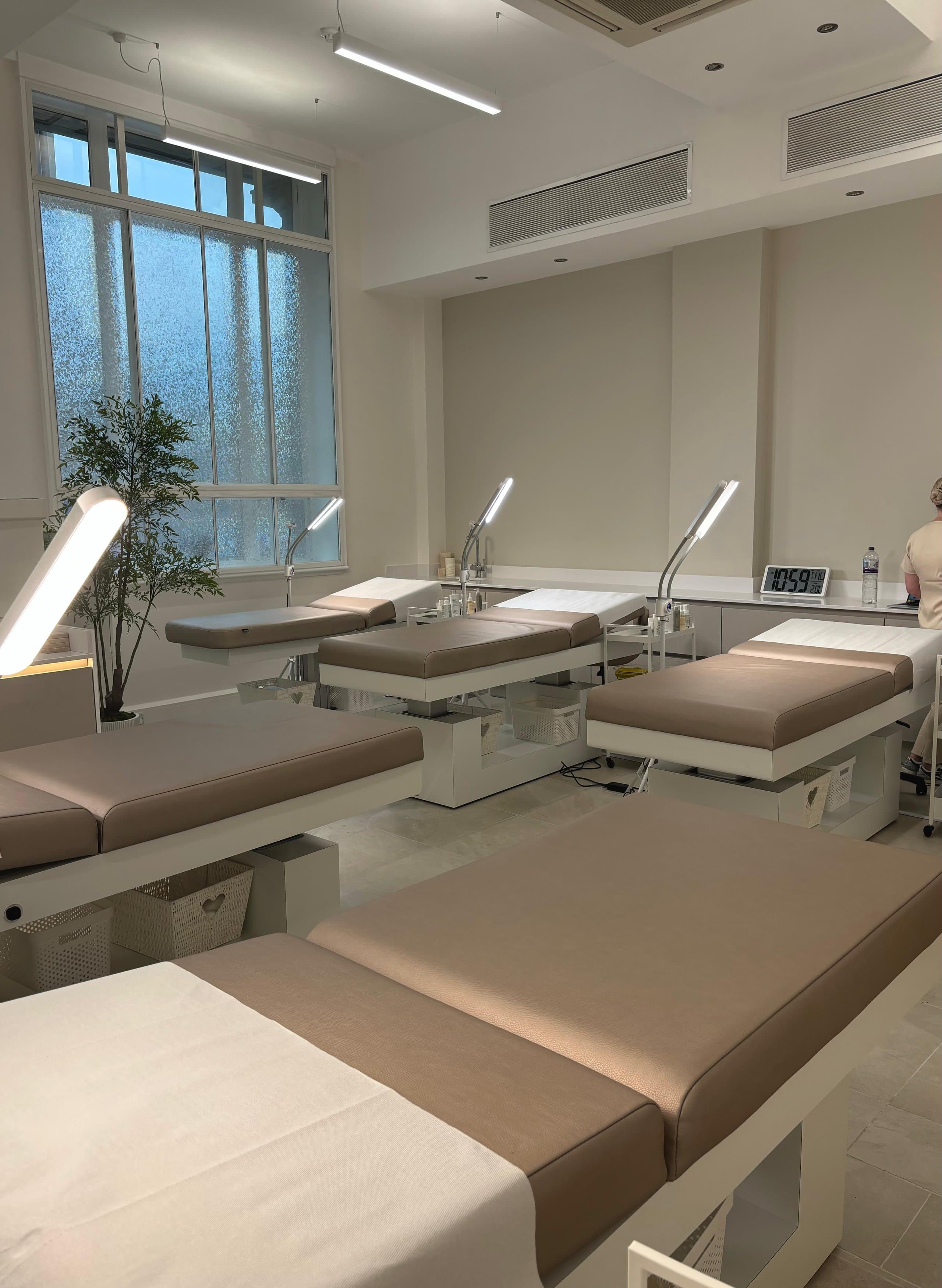
A treatment room can look immaculate and still be unsafe. A white trolley, folded towels and a pair of gloves tell us almost nothing about what happened to the device after its last client, whether the product nozzle touched a contaminated hand, or whether anyone knows what to do after a sharps injury.
Infection prevention is not a look. It is a system.
That system matters in every clinic, and it matters more as treatments become more advanced. A relaxing facial usually meets intact skin. Dermaplaning deliberately moves a blade across the surface. Microneedling creates thousands of controlled channels. Each procedure changes the likely exposure and therefore changes the controls.
The aim is not to turn a skincare clinic into an operating theatre. It is to match the precaution to the actual risk, every client, every treatment, every time.
Good infection prevention protects four things at once:
- The client receiving treatment.
- The practitioner delivering it.
- The next person who enters the room.
- The reputation and future of the clinic itself.
And it begins with one useful assumption: microorganisms are not always visible, and a person does not need to look unwell to carry them. Safe systems cannot depend on spotting infection by eye.
Clean is something a room looks. Infection-safe is something a clinic can demonstrate.
The chain of infection, and how a clinic breaks it.
For an infection to spread, several things need to line up.
There must be an infectious organism. It needs somewhere to live, called a reservoir or source. It needs a route out, a way to travel, a route into another person and someone susceptible at the other end.
In a skincare setting, that chain might involve microorganisms from skin or blood, a contaminated cartridge or handle, hands moving between dirty and clean tasks, and a fresh break in the skin.
The encouraging part is that the whole chain does not have to be defeated at once. Break one link and transmission becomes less likely. That is what the familiar controls are doing:
- Hand hygiene interrupts transfer by hands.
- Single-use equipment removes a contaminated item from the next procedure.
- Cleaning removes contamination before disinfection can do its job.
- PPE creates a barrier where exposure is foreseeable.
- Safe product handling stops one pot becoming a shared reservoir.
- Sharps procedures reduce injury and blood exposure.
- Client assessment postpones treatment when the skin or symptoms make it unsafe.
None is glamorous. Together, they are the infrastructure of professional practice.
Standard precautions: the baseline, not the emergency setting.
NHS England describes Standard Infection Control Precautions as the basic measures used for every person, whether infection is known or not. Its National Infection Prevention and Control Manual is written for health and care settings; private skincare clinics should not present themselves as NHS services, and the manual’s legal status is not identical in every setting. Its principles are still an excellent framework for thinking clearly about routine risk.1
Those principles cover:
- Assessment of infection risk.
- Hand hygiene.
- Respiratory and cough hygiene.
- Personal protective equipment.
- Safe management of equipment.
- Safe management of the environment.
- Safe management of linen.
- Safe management of blood and body-fluid spills.
- Safe disposal of waste, including sharps.
- Occupational safety and exposure incidents.
The word standard can make these sound basic. It means the opposite. They are the standards that remain in place before anyone knows there is a specific infection to respond to.
For a skincare clinic, the application should be risk-based. A pair of gloves worn throughout an appointment is not safer if those gloves move from the client’s skin to a drawer handle, phone, product pump and clean gauze. A beautifully disinfected trolley is not safe if the product pot on it is repeatedly double-dipped. The precaution has to fit the task and the workflow.
Assess the person, the procedure and the equipment.
Before deciding what controls are needed, ask three sets of questions.
The person
- Is there active infection, broken skin or unexplained inflammation in the treatment area?
- Are there symptoms that make postponement appropriate?
- Is healing compromised or is the person otherwise at increased risk?
- Has there been a previous reaction to the procedure, product or adhesive?
This is not a licence to diagnose. It is a decision about whether today’s treatment can proceed safely.
The procedure
- Does it touch intact skin only?
- Does it abrade, pierce or deliberately disrupt the barrier?
- Is contact with blood or body fluid foreseeable?
- Will a blade, needle or other sharp be used?
- Could spray, splash or product exposure reach the practitioner’s eyes, face or clothing?
The equipment
- Is it single-use, single-client or reusable?
- Does the packaging say it is sterile?
- Can every reusable part be cleaned effectively?
- What disinfection process does the manufacturer specify?
- Are the chosen chemicals compatible with the device?
- Can the clinic document that the process was completed?
If an item has crevices full of product, a damaged cable, a cracked surface or instructions the clinic cannot follow, the answer is not a more confident wipe. The answer may be to remove it from use.
| Treatment characteristic | Typical example | General control principle |
|---|---|---|
| Contact with intact skin | Some facial equipment | Clean between clients; disinfect where the risk assessment or instructions require |
| Contact with inflamed or compromised skin | Treatment around dermatitis or open lesions | Pause, modify or refer; do not treat through uncertainty |
| Superficial blade procedure | Dermaplaning | Sterile single-use blade, sharps disposal and blood-exposure plan |
| Percutaneous procedure | Microneedling | Sterile single-use cartridge, barriers, PPE, traceability and sharps controls |
| Shared device contact surface | IPL handpiece or reusable eye protection | Manufacturer-compatible cleaning and disinfection between clients |
This table is a starting framework, not a universal protocol. The treatment instructions, equipment instructions, insurer and applicable local conditions still control the detail.
Hand hygiene: the control everything else leans on.
Hands connect almost every part of a treatment: the client, trolley, device, product, linen, door, keyboard and waste bin. That makes hand hygiene one of the most powerful controls in the room.
Perform it at the moments that change the risk, including:
- Before preparing a clean treatment setup.
- Before touching the client where appropriate.
- Before handling sterile or clean supplies.
- After contact with blood, body fluid, non-intact skin or contaminated items.
- After removing gloves.
- After cleaning or handling waste.
- After coughing, sneezing or touching the face.
- Before moving back from a dirty task to a clean one.
Soap and water are important when hands are visibly soiled and in circumstances where alcohol hand rub is not sufficient. Alcohol-based hand rub is useful on visibly clean hands when appropriate. Follow current workplace policy and product instructions rather than carrying one rule into every circumstance.1
Technique matters, but so does access. A handwashing sink hidden behind boxes, an empty soap dispenser or a towel roll no one replaces is a system failure, not an individual oversight.
Hands also need care. Repeated wet work and chemical exposure can cause dermatitis, compromising the practitioner’s skin barrier. HSE guidance for beauticians emphasises prompt removal of contamination, proper washing, thorough drying and regular moisturising as part of occupational hand care.2
And the rule that deserves its own line:
Gloves do not replace hand hygiene.
Gloves and PPE: selected by the task, changed by the task.
Gloves are worn when exposure to blood, body fluids, non-intact skin, mucous membranes or contaminated items is anticipated. They create a temporary barrier. They do not create clean hands, and they do not make everything they touch clean.
Good glove practice means:
- Choosing an appropriate type and fit for the treatment and products used.
- Performing hand hygiene before putting them on where required.
- Putting them on close to the task, not at the beginning of a long room setup.
- Changing them between clients.
- Changing them when moving from a contaminated task to a clean one.
- Replacing them if torn or punctured.
- Removing them without contaminating the hands.
- Performing hand hygiene after removal.
- Never washing, spraying or rubbing them with hand sanitiser for reuse.
The contaminated-glove tour
Watch an appointment from the doorway and a common pattern appears. A practitioner puts on gloves, treats the client, adjusts the lamp, opens a drawer, touches the device screen, pumps more product, moves the bin, takes a photograph and then returns to the client. The gloves have not protected the clean environment; they have carried the treatment area across it.
The fix is workflow. Prepare before gloving. Use barriers where the manufacturer permits them. Keep clean supplies accessible without contaminating the store. Change gloves when the task changes.
Other PPE follows the same principle. Aprons protect clothing when contamination is foreseeable. Eye or face protection is appropriate where splash or spray may reach the face. Masks should be chosen for the actual exposure and current guidance, not used as theatre dressing.
Reusable eye protection must be decontaminated after use according to its manufacturer instructions. Single-use PPE is discarded after its intended use.1
Cleaning, disinfection and sterilisation are not synonyms.
These three words are often collapsed into “sanitise”. In professional practice, the difference matters.
Cleaning
Cleaning physically removes dirt, product, organic matter and a proportion of microorganisms. It does not necessarily destroy pathogens. It is often the essential first step because visible or microscopic soil can prevent a disinfectant or sterilisation process from working properly.3
Disinfection
Disinfection reduces the number of viable microorganisms to a level appropriate for the intended use. It does not necessarily destroy every virus, fungus or bacterial spore. The product, concentration, contact time, surface compatibility and organisms it is effective against all matter.
Sterilisation
Sterilisation is an absolute, validated process that destroys all viable microorganisms, including bacterial spores. A UV storage cabinet, a wipe, boiling water or a box marketed vaguely as “sterilising” is not automatically a validated steriliser.
The order is important: clean first, then disinfect or sterilise where required. HSE guidance notes that successful disinfection and sterilisation depend on the contamination present, making physical cleaning an important precursor.3
The method is chosen by risk and intended use. Equipment touching intact skin is managed differently from equipment penetrating skin. Items entering sterile tissue must be sterile. Single-use sterile equipment avoids the risks and complexity of attempting to reprocess invasive items inside a clinic.
Contact time is treatment time for the surface
A disinfectant wiped on and immediately wiped dry may never complete its stated job. Follow the product’s instructions for dilution, wet contact time, compatible surfaces, storage and disposal. More concentrated is not automatically better, and mixing cleaning chemicals can be dangerous.
The device instructions matter equally. The MHRA has warned that incompatible detergent or disinfectant wipes can degrade plastic medical-device surfaces, making them harder to decontaminate and potentially affecting function.4
Single-use, single-client and reusable: read the label before building the protocol.
These terms describe different things.
Single-use
A single-use item is intended for one procedure on one person, then disposal. Reprocessing it can change its strength, surface, performance and sterility. The MHRA warns that reuse can create safety, performance and legal consequences.5
For sterile single-use items:
- Check the packaging is intact and dry.
- Check the expiry date.
- Confirm the correct item and size.
- Open it as close as practical to use.
- Do not place it on a contaminated surface.
- Do not save an opened item for the next client.
- Dispose of it through the correct route.
Single-client use
A single-client item may be used more than once for the same person, if the manufacturer allows it and provides instructions for storage and any required processing. It does not move between clients. It is not the same as single-use.
Reusable
A reusable item needs a documented process that the clinic can actually perform. That process includes cleaning, any required disinfection or sterilisation, drying, inspection, storage, maintenance and traceability where relevant.
Procurement is part of infection control. Before buying a device, ask not only what it can do, but whether every client-contact surface can be decontaminated, which chemicals are compatible, what training is required and what happens when a surface becomes damaged.
If the answer is unclear before purchase, it will not become clearer between two back-to-back clients.
Design the room for a clean-to-dirty flow.
A safe treatment room makes the correct action easy.
Think in three zones:
The clean zone
Protected supplies, unopened sterile items, clean linen and products prepared for use. This area stays away from sinks, splash, used equipment and waste.
The treatment zone
Only the items needed for the procedure. Fewer objects mean fewer surfaces to contaminate and fewer things to clean afterwards.
The dirty zone
Used equipment, waste, laundry and sharps move here or directly into their disposal or decontamination route. They do not travel back across the clean setup.
Practical design choices support that flow:
- Use intact, non-porous, cleanable work surfaces.
- Keep handwashing facilities accessible and stocked.
- Store clean supplies closed and protected from dust and splash.
- Position the sharps container close to the point of use.
- Avoid overfilling the immediate treatment area with stock.
- Keep waste containers accessible without creating a hand-contact obstacle course.
- Remove or protect objects that cannot be decontaminated effectively.
- Include cables, controls and handpieces in the cleaning plan.
- Keep personal items outside the treatment zone.
Product handling: the shared pot problem.
Products can become part of the transmission chain when the same pump, pot, brush or nozzle moves between contaminated hands and clients.
Build product control into setup:
- Prefer pumps, tubes or single-dose formats where suitable.
- Dispense what is needed before a dirty task begins.
- Use a clean disposable spatula where a pot must be accessed.
- Never double-dip an applicator.
- Do not touch bottle nozzles to skin, gloves or used containers.
- Keep lids and caps off contaminated surfaces.
- Follow manufacturer rules for decanting; do not decant simply for appearance.
- Label permitted decanted products clearly.
- Observe storage temperature, shelf life and period-after-opening instructions.
- Discard a product if its contamination or integrity is uncertain.
Water deserves particular attention. Introducing tap water to dilute or “refresh” a product can compromise preservation and changes the formulation. Follow the product instructions exactly.
One elegant shelf of back-bar products is not worth much if every bottle has become a high-touch surface no one remembers to clean.
Between every client: the treatment turnover.
The appointment is not finished when the client leaves. It is finished when the room is safely ready for the next one.
Use a consistent turnover sequence:
- Dispose of sharps immediately at the point of use.
- Remove single-use items and waste without carrying them across clean supplies.
- Bag or contain used linen appropriately.
- Remove PPE safely and perform hand hygiene.
- Put on task-appropriate PPE for cleaning where required.
- Remove visible product and contamination.
- Clean, then disinfect relevant surfaces and reusable equipment as required.
- Observe the disinfectant’s stated contact time.
- Follow device-specific instructions for handpieces, cables, controls and attachments.
- Inspect for damage or residue.
- Remove cleaning PPE and perform hand hygiene.
- Replace barriers and linen.
- Restock from the clean zone without contaminating storage.
- Prepare the next treatment only after the room is complete.
The surfaces clinics forget
- Trolley and drawer handles.
- Magnifying-lamp controls.
- Device screens, buttons and cables.
- Treatment-bed controls.
- Stool adjusters.
- Product pumps and caps.
- Reusable protective eyewear.
- Door handles.
- Pens, clipboards and consent tablets.
- Phones, cameras and ring lights used for client photography.
A cleaning schedule should name the item, method, frequency and person responsible. “Everything gets wiped” is not a schedule.
Treatment-specific infection controls.
The principles stay consistent. The controls change with the treatment.
Facials
Many facial techniques contact intact skin, but product contamination and shared tools remain relevant. Bowls, brushes, spatulas, towels, extraction tools and machine attachments each need a defined use and decontamination route. Do not return a used applicator to a product pot. Do not treat active infection simply because the appointment is described as gentle.
Read our facials and advanced facials guide.
Chemical peels
Chemical peels add chemical exposure to the infection-control picture. Prepare applicators cleanly, protect product integrity, control spills, observe COSHH requirements and prevent contaminated applicators returning to a container. Active infection, open lesions and a compromised barrier can make treatment inappropriate. Follow the peel manufacturer’s protocol rather than transferring timings or neutralisation steps from another brand.
Read our chemical peels guide.
Dermaplaning
Dermaplaning uses a blade, and a small nick or blood spot is foreseeable even in skilled hands. Use a sterile single-use blade, assemble and handle it safely, and dispose of it immediately into an appropriate sharps container. The clinic needs a blood-exposure plan before the first blade is opened, not after the first incident.
Read our dermaplaning guide.
Microneedling
Microneedling deliberately breaches the skin and may expose blood or tissue fluid. Use the correct sterile single-use cartridge, check its packaging and expiry, protect reusable device surfaces as specified, and follow the manufacturer’s decontamination instructions. Traceability should connect the client record to the device, cartridge or batch details where required. Dispose of the cartridge directly into the correct sharps route.
A barrier sleeve protects only what it covers. It does not make the device beneath it permanently clean, and it does not replace the manufacturer’s cleaning process.
Read our microneedling guide.
IPL and laser
IPL and laser devices may be non-invasive, but client-contact handpieces, treatment-bed surfaces, cooling methods, reusable eye protection and device controls still move between people. Follow the device manufacturer’s compatibility and decontamination instructions. Protect optical surfaces and never substitute a convenient chemical that can damage the device. Licensing and room requirements may also apply locally.
Read our IPL and laser guide.
| Treatment | Main infection-control consideration | Non-negotiable principle |
|---|---|---|
| Facial | Shared products, tools, linen and attachments | No double-dipping; defined decontamination route |
| Chemical peel | Product handling, compromised skin, chemical safety | Manufacturer protocol and COSHH controls |
| Dermaplaning | Blade and foreseeable blood exposure | Sterile single-use blade and immediate sharps disposal |
| Microneedling | Percutaneous exposure and reusable device surfaces | Sterile single-use cartridge, barriers, traceability and decontamination |
| IPL/laser | Handpieces, controls and reusable eye protection | Manufacturer-compatible process between clients |
A sharps injury: the procedure nobody should improvise.
Every clinic using needles or blades needs a written, rehearsed exposure procedure and a route to urgent medical or occupational-health advice.
If a sharp that may be contaminated breaks the skin, HSE advises the worker to:10
- Encourage the wound to bleed gently, ideally under running water.
- Wash it with running water and plenty of soap.
- Do not scrub the wound.
- Do not suck the wound.
- Dry it and cover it with a waterproof dressing.
- Seek urgent medical advice because time-sensitive preventive treatment may be available.
- Report the incident to the employer.
The clinic should preserve the information needed for risk assessment, document the incident and follow professional advice. Do not delay urgent assessment while attempting to determine risk from internet tables.
Some occupational exposures are reportable under RIDDOR; the criteria depend on the circumstances and outcome. HSE’s current guidance should be checked rather than assuming every sharps injury is reportable or none is.9
Blood and body-fluid spills.
A spill procedure should be written before it is needed and should identify the product, PPE, waste route and person responsible.
The general sequence is:
- Keep people away from the area.
- Put on risk-appropriate PPE.
- Contain and remove visible contamination safely.
- Clean the surface.
- Apply an appropriate approved disinfectant where required.
- Follow its dilution, compatibility and contact-time instructions.
- Dispose of contaminated materials through the correct waste stream.
- Remove PPE safely and perform hand hygiene.
- Report and document significant incidents.
There is no responsible universal recipe for every spill and every surface. The product must be suitable for the organism risk, material and intended environment. NHS England provides a current blood-and-body-fluid spill pathway in its infection-control appendices.11
Never mix cleaning chemicals. Never assume that a stronger concentration is safer. Never use a chemical on a device unless compatibility is established.
Waste, sharps and linen: the treatment continues after disposal.
Waste does not become safe because it has left the trolley.
Clinics need to identify the waste they produce, segregate it at source, use the correct containers and arrange collection through an appropriate contractor. Sharps require purpose-designed rigid receptacles. Items contaminated with blood or body fluid may follow a different route from ordinary municipal waste. Requirements depend on the waste, treatment and UK jurisdiction.
Environment Agency guidance points healthcare practices to HTM 07-01, the memorandum on the safe management of healthcare waste, for how waste should be classified and segregated.12 A private skincare clinic should establish which requirements apply to its actual waste rather than copy colour codes from an unrelated setting.
For linen:
- Remove it without unnecessary shaking.
- Keep used linen away from clean supplies.
- Bag or contain it according to the clinic’s process.
- Use an appropriate laundering arrangement.
- Ensure it is fully dry before storage.
- Store clean linen protected from splash, dust and handling.
- Remove damaged or visibly compromised linen from use.
A basket of beautifully rolled towels is not clean storage if it sits beneath a sink or beside the dirty-linen route.
Cleaning chemicals, products and COSHH.
Infection control protects the client from microorganisms. COSHH also protects the people doing the cleaning and treatment from hazardous substances.
Beauty and cleaning products can irritate skin, cause allergy or affect breathing. HSE advises beauty businesses to reduce exposure through ventilation, good technique, hand care and appropriate PPE based on the task.2
A clinic’s chemical system should include:
- An inventory of relevant hazardous products.
- Current safety data sheets.
- Suitable COSHH assessments.
- Training in dilution, use, storage and spills.
- Clear labels on every container.
- Separation of incompatible products.
- Secure storage.
- Appropriate ventilation.
- Task-specific PPE.
- A process for reporting reactions and exposure.
Never mix disinfectants or cleaners. Never move a chemical into an unlabelled decorative bottle. Never assume “natural” means non-irritant, and never assume “clinical strength” means suitable for every surface.
Policies, records and audit: prove the system works.
Written policies matter because memory is unreliable and staff change. But a policy in a folder is not evidence that the room is safe.
A proportionate clinic system may include:
- Infection-prevention policy.
- Treatment-specific risk assessments.
- Opening, turnover and closing schedules.
- Equipment instructions and maintenance records.
- Decontamination instructions for reusable items.
- COSHH assessments and safety data sheets.
- Staff training and competency records.
- Waste-transfer documentation.
- Sharps and exposure procedure.
- Incident and near-miss records.
- Batch, cartridge or consumable traceability where relevant.
- Steriliser or reprocessing records where applicable.
- Audit findings and corrective actions.
Audit should compare the written process with what actually happens. Watch a room turnover. Follow one cartridge from storage to disposal. Check whether the contact time on the disinfectant is genuinely observed. Ask a team member what they would do after a needlestick.
The point is not to catch people out. It is to find the weak link before an incident does.
UK rules: location and procedure matter.
There is no single licensing arrangement covering every advanced-skincare treatment across the whole UK.
Requirements vary by:
- The treatment being performed.
- Whether the procedure pierces the skin.
- The practitioner’s professional status.
- The premises and local authority.
- The UK nation.
- The device used.
- Insurance and awarding-body conditions.
England and Wales have local registration requirements for defined procedures such as tattooing, semi-permanent skin colouring, cosmetic piercing, electrolysis and acupuncture. Greater London, with the exception of the City of London, operates special-treatment licensing through borough councils instead, with treatment lists and conditions that can extend further.13
Wales now has a mandatory Special Procedures Licensing Scheme for specified procedures, supported by current Public Health Wales infection-prevention guidance.14 That does not mean the Welsh scheme covers every advanced facial treatment, and it should not be copied as a statement of English law.
The practical rule is simple:
Before introducing a treatment, confirm the current position with the local authority, insurer, awarding body and equipment or product manufacturer.
Do not rely on a training provider’s generic sentence when the authority responsible for the premises can give the current answer.
The clinic checklists.
These checklists support a clinic’s own risk-assessed procedures. They do not replace them.
Printing this page gives you the three checklists on clean A4.
Opening checklist
- Handwashing facilities are accessible and stocked.
- Treatment surfaces are visibly clean, intact and dry.
- Clean linen is protected from contamination.
- Disinfectants are in date and prepared according to instructions.
- Required safety data sheets and spill equipment are available.
- Sterile packaging is intact, dry and in date.
- Sharps containers are correctly assembled, secure and below the fill line.
- Waste containers are ready and correctly positioned.
- Equipment pre-use checks are complete.
- Emergency and occupational-health contacts are accessible.
- The room contains only the stock needed for planned treatments.
Between-client checklist
- Sharps were disposed of immediately at the point of use.
- Single-use items and waste were removed safely.
- Used linen was contained without crossing clean storage.
- PPE was removed safely and hand hygiene performed.
- Visible contamination was removed.
- Required surfaces and equipment were cleaned and disinfected.
- Product instructions and wet contact times were followed.
- Device-specific decontamination was completed.
- High-touch objects, controls and photography equipment were included.
- Equipment was inspected for damage or residue.
- Clean barriers and linen were replaced.
- Restocking occurred without contaminating clean storage.
- Hand hygiene was completed before the next setup.
Closing checklist
- Full scheduled room cleaning is complete.
- Reusable equipment is decontaminated, dry and stored safely.
- Products are closed, checked and stored correctly.
- Clean and dirty linen routes are separated.
- Waste is segregated and secured.
- Sharps containers are checked and secured.
- Floors, sinks and high-touch points are included according to schedule.
- Equipment is switched off or maintained as instructed.
- Cleaning actions are recorded.
- Incidents and stock or equipment concerns are escalated.
Seven things worth remembering.
- Infection prevention is risk-based. Match controls to the person, procedure and equipment.
- Hand hygiene and gloves perform different jobs. One never replaces the other.
- Cleaning, disinfection and sterilisation are not interchangeable. Use the right process in the right order.
- Single-use means single-use.Convenience does not change the manufacturer’s designation.
- The treatment-room workflow matters. Clean items should move towards treatment, then away through disposal or decontamination, not back into storage.
- Sharps exposure needs a rehearsed response. Urgent action cannot depend on whoever happens to be working.
- The strictest relevant instruction wins. Check the manufacturer, insurer, local authority and applicable law.
Infection prevention FAQs.
What is the difference between cleaning, disinfection and sterilisation?
Cleaning physically removes dirt, product and contamination. Disinfection reduces viable microorganisms to a level appropriate for the item's intended use but may not destroy every organism or spore. Sterilisation is a validated process that destroys all viable microorganisms, including bacterial spores. Cleaning is commonly required before effective disinfection or sterilisation.
Do skincare professionals need gloves for every treatment?
Gloves should be selected according to the task and anticipated exposure. They are required where contact with blood, body fluid, non-intact skin, mucous membranes or contaminated items is foreseeable. Wearing gloves unnecessarily can still spread contamination when the same pair touches clients, phones, drawers and products.
Does wearing gloves replace handwashing?
No. Hands can become contaminated during glove removal or through unnoticed damage. Perform hand hygiene at the appropriate moments, including after removing gloves.
Can single-use equipment ever be reused?
An item designated single-use by its manufacturer should be used once and disposed of correctly. Reprocessing can affect its sterility, integrity and performance and may create safety and legal consequences.
Do microneedling cartridges need to be sterile?
Microneedling cartridges pierce the skin and should be supplied sterile for single use, with intact packaging and a valid expiry. Follow the device manufacturer's exact instructions and maintain any required batch or cartridge traceability.
How should dermaplaning blades be disposed of?
Use a sterile single-use blade and place it directly into an appropriate sharps container at the point of use. Do not leave it on the trolley, carry it across the room or attempt to reuse it.
What should happen after a needlestick or blade injury?
HSE advises gently encouraging bleeding under running water, washing with soap and water, not scrubbing or sucking the wound, drying and covering it, obtaining urgent medical advice and reporting the incident. Follow the clinic's written exposure procedure.
What must be cleaned between every client?
Every client-contact item and contaminated or high-touch surface identified by the treatment risk assessment and manufacturer instructions. This commonly includes the treatment bed, trolley, device handpiece and controls, lamp controls, reusable eye protection and any phone or camera used during treatment.
Can the same disinfectant be used on every device?
Not safely by default. A chemical may damage plastics, optical surfaces, seals or electronics. Use only a product and method compatible with the device manufacturer's instructions and observe the stated concentration and contact time.
Does every skincare clinic need an autoclave?
No universal answer applies to every clinic. It depends on the instruments and procedures. Many clinics reduce reprocessing risk by using sterile single-use invasive items. If reusable instruments require sterilisation, the clinic needs an appropriate validated pathway, maintenance, testing, training and records.
What infection-control records should a clinic keep?
Records should reflect the clinic's actual risks and may include policies, risk assessments, cleaning schedules, equipment instructions, maintenance, staff training, COSHH information, waste documentation, traceability, incident records and audit actions.
Do UK skincare clinics need a special-treatment licence?
Requirements vary by treatment, location and UK nation. Some procedures require registration or licensing, and Greater London boroughs have special-treatment schemes. Check the current position with the local authority responsible for the premises and confirm any insurer and manufacturer conditions.
References and further reading.
This guide translates current infection-prevention principles into an advanced-skincare setting. Some source documents were written for healthcare or defined special procedures; where their formal scope differs from a private skincare clinic, we have made that distinction in the text rather than presenting every document as universal law.
- NHS England, National Infection Prevention and Control Manual: Standard Infection Control Precautions. (source)
- Health and Safety Executive, COSHH and beauticians: key messages. (source)
- Health and Safety Executive, Decontamination against bloodborne viruses: levels of decontamination. (source)
- Medicines and Healthcare products Regulatory Agency, Detergent and disinfectant wipes used on reusable medical devices: risk of degrading plastic surfaces. (source)
- Medicines and Healthcare products Regulatory Agency, Single-use medical devices: implications and consequences of reuse. (source)
- Health and Safety Executive, Blood-borne viruses. (source)
- Health and Safety Executive, Managing the risk of needlestick or sharps injuries. (source)
- Health and Safety Executive, Health and Safety (Sharp Instruments in Healthcare) Regulations 2013: guidance for employers and employees. (source)
- Health and Safety Executive, Legal information on blood-borne viruses. (source)
- Health and Safety Executive, Needlestick or sharps injuries: overview and immediate action. (source)
- NHS England, National Infection Prevention and Control Manual appendices: blood and body-fluid spills and occupational exposure. (source)
- Environment Agency, Healthcare waste: managing healthcare wastes. (source)
- GOV.UK, Tattoo, piercing and electrolysis licence: England and Wales. (source)
- Public Health Wales, Infection Prevention and Control guidance for special procedures in Wales. (source)
- NHS England, National infection prevention and control resources. (source)
Historical context
Habia’s 2006 Hygiene in Beauty Therapy booklet was an important early practical resource for the sector. It is no longer published at its original address, and the local-authority copy we could still trace now returns an error, so we have not linked it here. It remains useful as historical context rather than as the authority for any current legal or procedural claim: where it differs from the sources above, the current guidance wins.