
Aesthetician Courses UK · Medic-Led · Ofqual Regulated
Aesthetician courses that launch real careers.
Whether you’re starting from zero or adding regulated qualifications to years of experience, this page maps the whole journey: what an aesthetician actually does, how training works in the UK, what separates a serious course from a certificate, and where MSTA fits in.
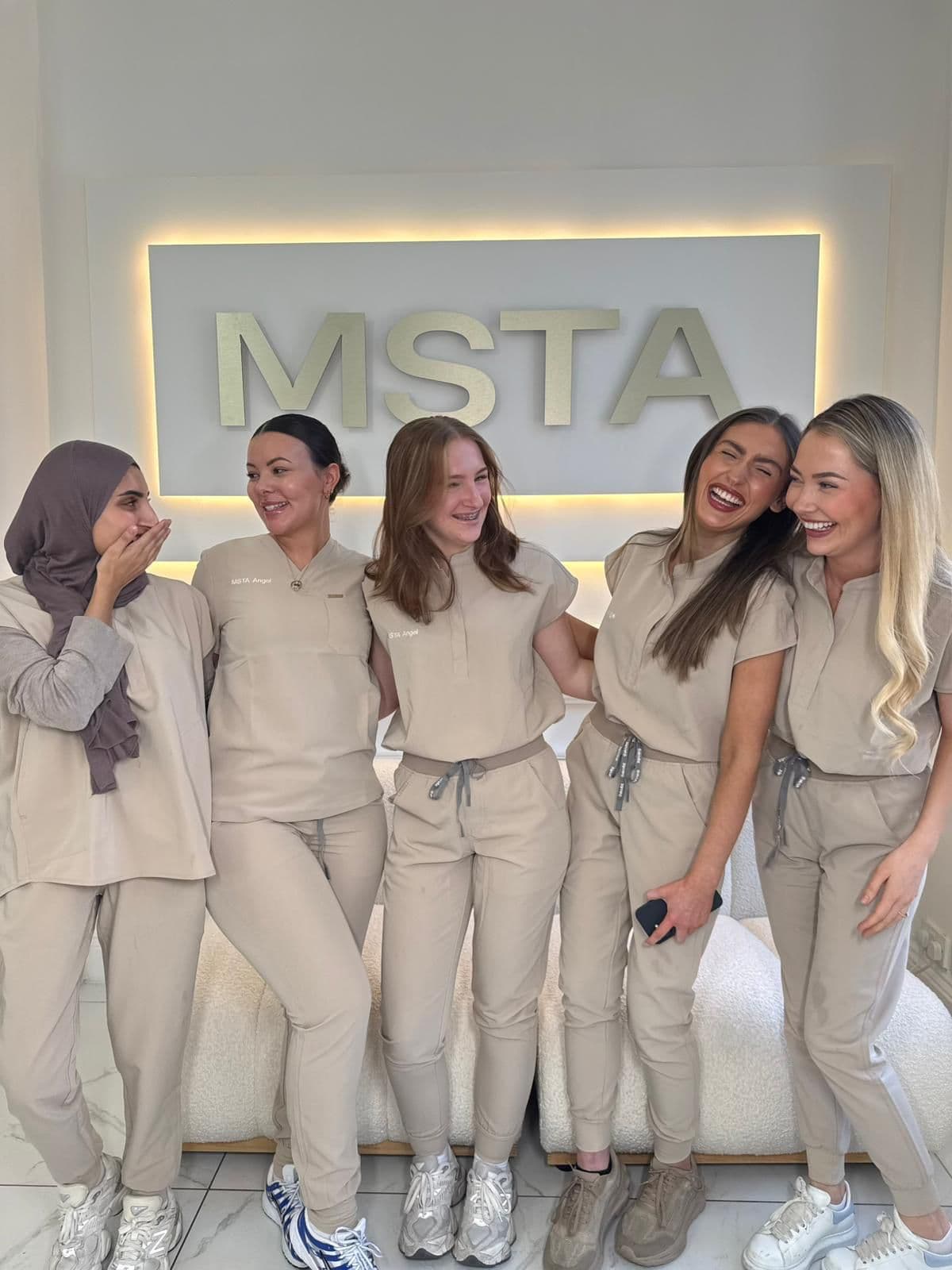
Founded by medics · VTCT Skills approved centre · 1,000+ students trained · 500+ careers launched
Start here
What does an aesthetician actually do?
An aesthetician is a skin specialist. Not a beauty generalist, and not an injector, but the professional clients book when they want their skin genuinely transformed: clearer, brighter, healthier, and kept that way.
Day to day, that means consultations and skin analysis, advanced facials, chemical peels, microneedling and dermaplaning, plus the clinical judgement to build treatment plans that change skin over months, not minutes. It is a craft with real science underneath it, which is why proper training matters so much.
Aestheticians work everywhere skin does: in clinics and salons, in rented treatment rooms, and increasingly in studios of their own. Many of our graduates started exactly where you are now, googling courses with no experience at all. Their stories are further down this page.
The jargon, translated
Four job titles, one industry.
Course pages across the UK use these words loosely, sometimes interchangeably. Knowing the difference makes you a much sharper comparison shopper. Searching the American way? Our esthetician school page is this one’s spelling twin.
Aesthetician
The British spelling. A trained skincare professional delivering results-led treatments: advanced facials, chemical peels, microneedling, dermaplaning. This is the title MSTA graduates carry.
Esthetician
The American spelling of exactly the same profession. If you searched the US way, our esthetician school page covers the same ground from that side of the Atlantic.
Beautician
A broader beauty-therapy role spanning nails, waxing, lashes, make-up and more. A brilliant career in its own right, but not the same as specialising in advanced skin.
Aesthetic practitioner
An umbrella term that often includes injectors. Worth knowing when you compare courses: MSTA trains Skincare Aestheticians, and deliberately does not teach Botox or filler.
Know your options
The three routes into the industry.
Every aesthetician course in the UK sits somewhere on this map. None of the routes is wrong; they just suit different people, budgets and ambitions.
Route one
College beauty therapy
The traditional route: an NVQ or diploma in beauty therapy at a further-education college. Thorough and well recognised, but broad by design. You'll cover nails, waxing and massage alongside skin, usually over one to two years. Ideal if you want general beauty; slower if skin is the goal.
Route two
Private training academies
Specialist academies like MSTA focus entirely on skin and aesthetics, so you go deeper, faster, with more hands-on hours. Quality varies enormously across the sector, which is exactly why the checklist below exists. The best academies pair regulated qualifications with real clinic training.
Route three
Short CPD courses
One and two day certificated courses in a single treatment. Genuinely useful for qualified professionals adding a new skill to an existing menu. They're a top-up, though, not a foundation: on their own they won't give a beginner the underpinning knowledge insurers want to see.
Choose properly
What separates a course from a certificate.
The single most useful question you can ask any training provider is this: is the qualification Ofqual regulated? Ofqual is the government body that regulates qualifications in England, and a regulated qualification sits on a national framework that insurers, awarding bodies and premium brands all recognise.
CPD-accredited certificates are different: genuinely valuable for continuing development and for adding treatments once you’re qualified, but they are not regulated qualifications, and they are not designed to carry a whole career on their own. A serious pathway usually involves both, in the right order. For context, a licensing scheme for non-surgical cosmetic procedures in England is currently in consultation.
01
Ofqual-regulated qualifications
Ask whether the course leads to a regulated qualification on a government-recognised framework, or a certificate of attendance. Both have their place, but they are not the same thing.
02
A recognised awarding body
MSTA delivers through our VTCT Skills approved centre. Whoever you train with, check the awarding body behind the certificate and that the centre is genuinely approved.
03
Hands-on hours on real clients
Skin cannot be learned from slides. Ask how many supervised treatments you'll perform on real clients, in real clinic conditions, before you qualify.
04
Who actually teaches you
Are the educators working practitioners? MSTA is medic-led and grew out of a working clinic, so you learn current clinical practice, not theory frozen in a manual.
05
Insurer and brand recognition
Your qualification is only as useful as the doors it opens. Check that UK insurers will cover you, and that professional skincare brands will supply you, on the strength of it.
06
What happens after you qualify
A certificate without a career plan is an expensive wall decoration. Look for business support, a community and a progression route, so you're never finished growing.
See exactly how MSTA answers all six, in one document.
Aesthetician courses at MSTA
One academy, three ways in.
MSTA is the UK’s medic-led skincare training academy, founded in 2018 and born out of a working skin clinic that has been transforming skin since 2014. Wherever you’re starting from, there’s a course built for it.
Starting from zero
Aesthetic Skincare for Beginners
Our flagship pathway for career-changers. It assumes no experience at all and takes you from the science of skin through Ofqual-regulated VTCT qualifications to treating real clients, with business launch support built in.
Explore the beginner pathway→Already a professional
VTCT Levels 2 to 6
For working therapists and aestheticians who want the regulated credential behind their experience: conversion routes, Level 4 and beyond, delivered through our VTCT Skills approved centre.
See the VTCT courses→Qualified and growing
Executive Skincare Courses
Focused, advanced trainings for qualified professionals: master a specific treatment or protocol and add it straight to your menu, taught to the same medic-led standard.
Browse executive courses→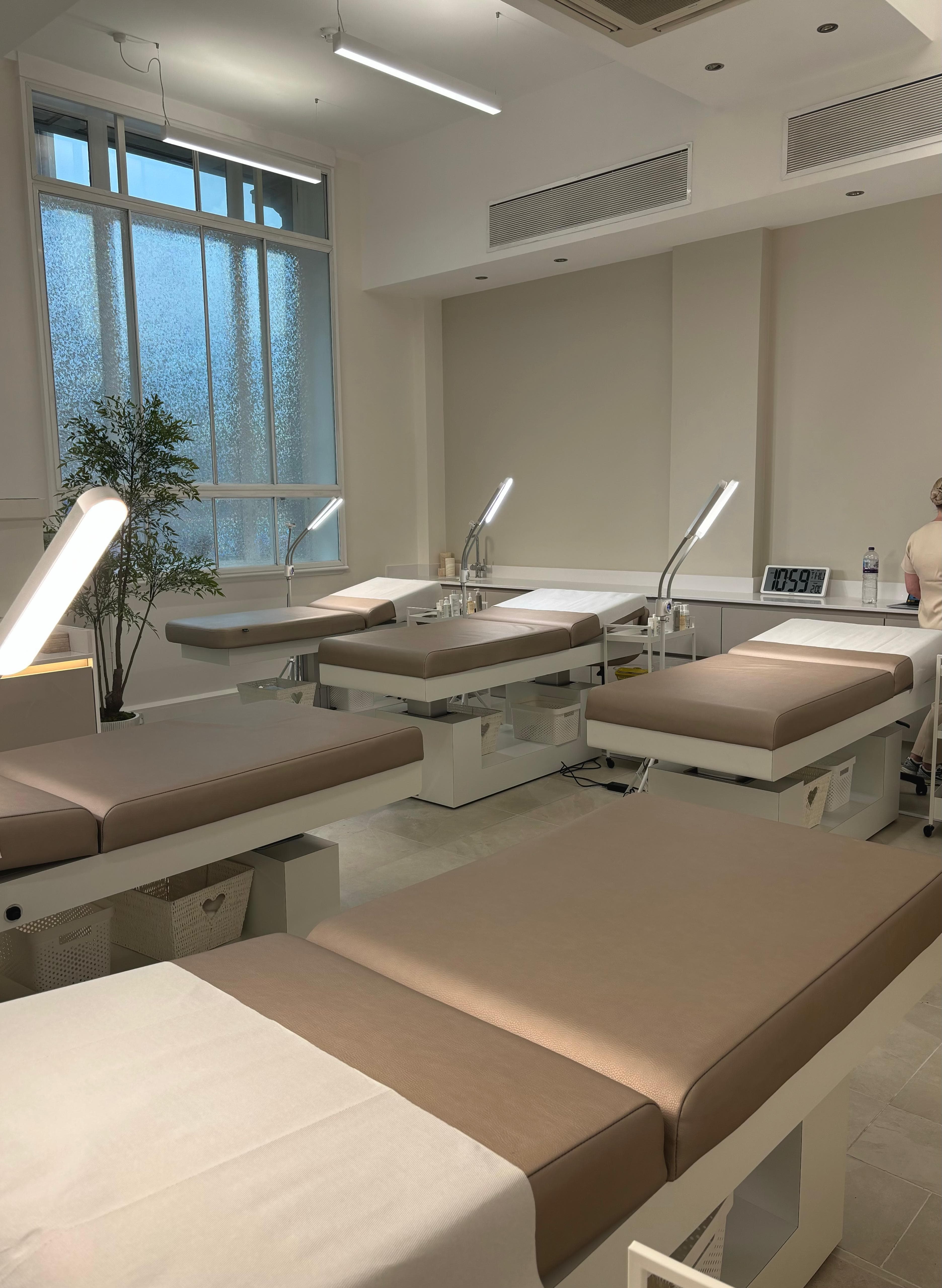
After you qualify
Where an aesthetician course can take you.
Skincare is the fastest-growing corner of UK beauty, and in 2025 skincare sales outsold make-up for the first time. Qualified, insured aestheticians are meeting that demand from clinic rooms, salons and studios of their own, on hours they choose.
As a guide, practitioners typically charge £75–£130 per treatment depending on where they are. What you build from there is up to you: many MSTA graduates now run their own skincare businesses, and every one of them started with the same first step you’re considering now.
Trusted partners
The brands and bodies we train with.
MSTA work with Dermaceutic Laboratoire, SkinPen Precision, Mesoestetic, Dermalogica and Cosmacure Biotechnologies, alongside VTCT Skills and the CPD Certification Service.




Careers our courses have already launched.
Real MSTA graduates, in their own words. No stock photos, no scripts.
Straight from Google
Don’t just take our word for it.
Rated 5.0 from 100+ Google reviews, written by real MSTA graduates.
See all our reviews on Google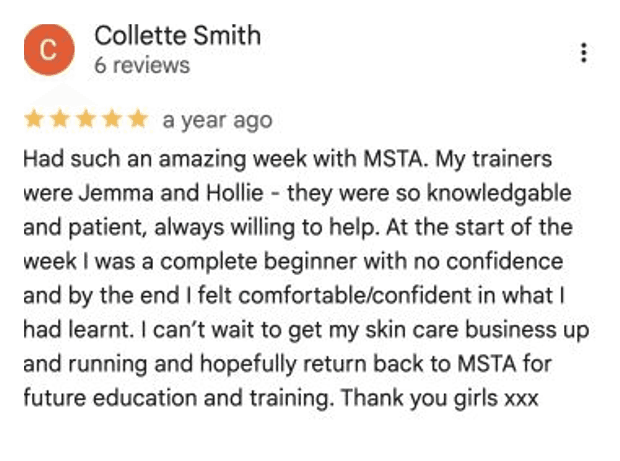
Collette Smith · Milele Skin
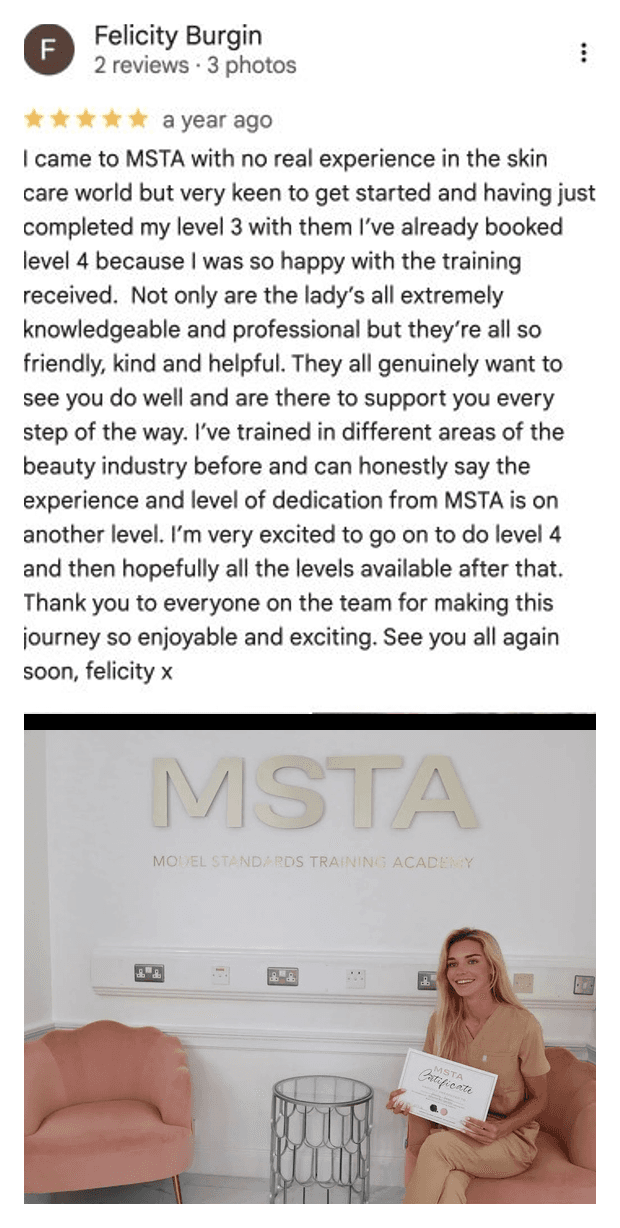
Felicity Burgin · Penelope Skin Clinic

Danielle Halkyard · Pure Glow Huddersfield
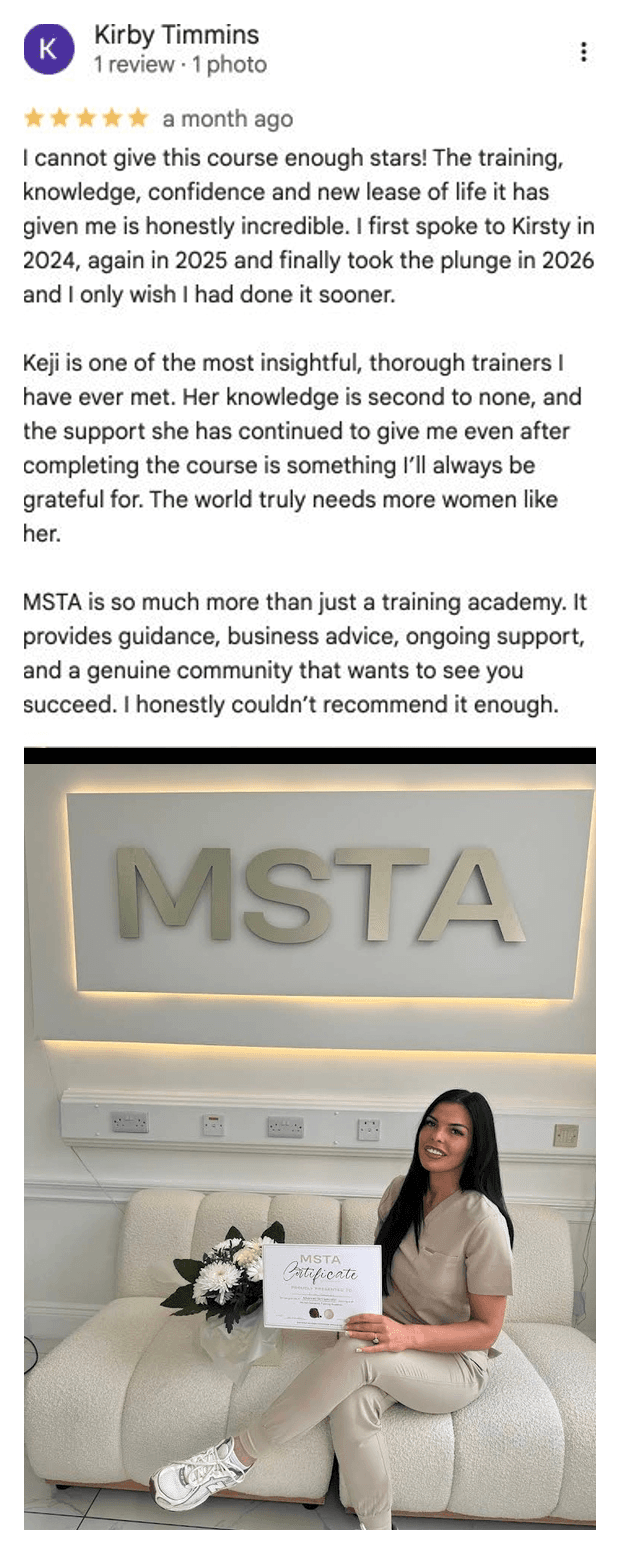
Kirby Timmins
Deb Ho · Skin Essential
Hayley Collins
Amy Fairclough · Studio Glow
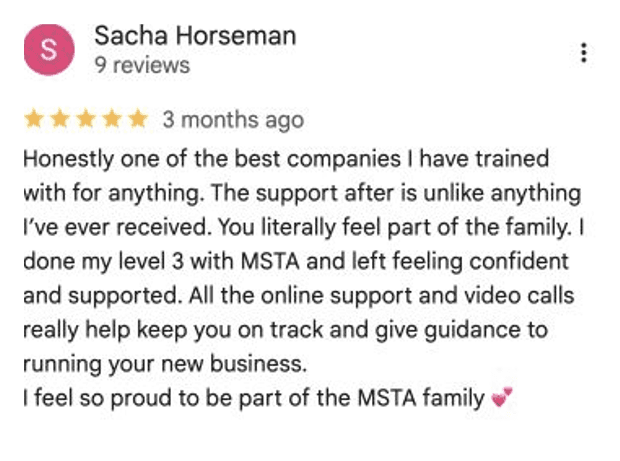
Sacha Horseman · Fake It Aesthetics Bristol
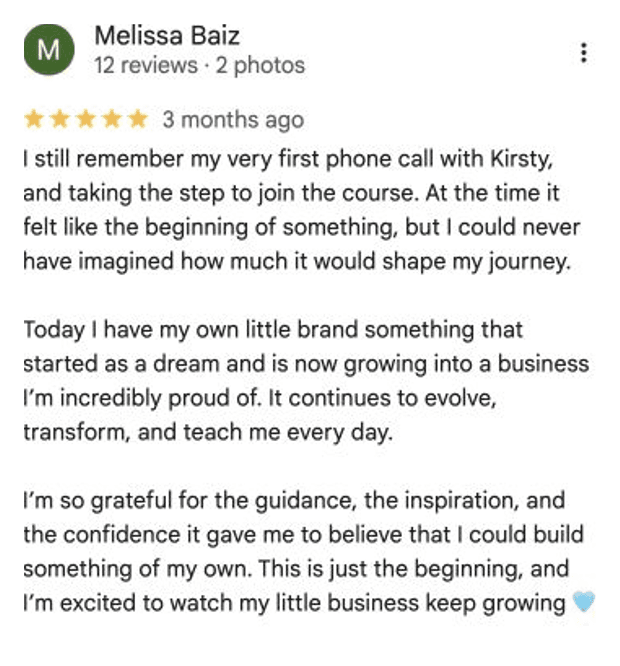
Melissa Baiz · Suco Skin
Aesthetician course questions, answered.
What qualifications do I need to become an aesthetician in the UK?
There is no single compulsory licence for skincare treatments in the UK today. In practice, though, the industry has its own gatekeepers: insurers will only cover you, and professional brands will only supply you, when you hold recognised training. That is why regulated qualifications, like the Ofqual-regulated VTCT levels MSTA delivers, have become the professional standard.
How much do aesthetician courses cost in the UK?
It ranges from under a hundred pounds for a one-day certificate to several thousand for a full career pathway, which is why comparing like with like matters. MSTA's flagship Aesthetic Skincare for Beginners pathway is £6,000 + VAT (£7,200 all-in), secured with a £500 deposit, and covers regulated qualifications, hands-on clinic training and business launch support. The brochure breaks down exactly what's included.
How long does it take to qualify as an aesthetician?
It depends on the route. College beauty therapy typically runs one to two years. MSTA's pathway is modular and hybrid, with theory online around your life and hands-on training in concentrated academy blocks, so many students are treating their first paying clients within months of starting.
Are online aesthetician courses worth it?
Online study is brilliant for the theory: anatomy, physiology and skin science genuinely suit it, and MSTA teaches that side online. But nobody becomes safe with skin through a screen. Treatments must be learned hands-on, on real clients, under supervision. Fully online 'aesthetician' courses that promise otherwise are best avoided.
Do I need Level 4 to work as an aesthetician?
No. Many aestheticians build busy, brilliant careers on Levels 2 and 3, delivering facials, skin consultations and entry-level advanced treatments. Level 4 and above unlock deeper clinical knowledge, more advanced protocols and certain premium brands, so we treat them as a natural progression rather than a barrier to entry.
Can I train as an aesthetician with no experience?
Yes. Most MSTA students arrive as complete beginners: career-changers from teaching, nursing, offices and everywhere in between. Aesthetic Skincare for Beginners was designed for exactly that, starting with the science from zero and building to supervised treatments on real clients.
Do aesthetician courses at MSTA cover Botox or fillers?
No, deliberately. MSTA trains Skincare Aestheticians, not injectors. Our courses live at the intersection of skincare and aesthetics: results-led skin treatments that create natural, healthy results without needles or filler.
Where do MSTA's aesthetician courses run?
Our academies are on Rodney Street and Chapel Street in Liverpool city centre. Because the theory happens online and the hands-on training runs in concentrated blocks, students travel in from all over the UK, and plenty make a proper trip of their academy weeks.
Ready to choose your aesthetician course properly?
The brochure puts everything from this page in one place: the pathway, the qualifications, the treatments, current pricing and payment plans. Read it with a cuppa, then decide.