

I want to say something honest with you, and I mean it properly. If you’ve been thinking about training in skincare (even vaguely, even just in those quiet moments when you’re wondering if there’s something more out there), 2026 is genuinely the best time to make that decision. Not in a “sales pitch” way. In a real, market-reality way. And I want to walk you through why.
Because what I see happening right now, week after week, in conversations with women considering their next move, is this: the hesitation isn’t about whether the career exists. It’s about whether it’s worth it. Whether the demand is real. Whether you can actually build something sustainable from it. And I get that. I’ve felt it too.
But here’s what the data says. Here’s what the industry is actually doing. And here’s what our own graduates are experiencing right now, this month, as they’re building their careers.
The cultural moment is here
If you’ve scrolled through Instagram or TikTok in the last year, you’ve felt this shift. The no-makeup movement that Alicia Keys started years ago isn’t a niche anymore: it’s mainstream. Hailey Bieber’s glazed donut skin aesthetic has a waitlist. Zendaya and Bella Hadid aren’t talking about heavy contouring or full-coverage makeup. They’re talking about skin health. About glass skin. About looking like yourself, but the best possible version.
This isn’t just influencer noise. This is a genuine cultural shift in how people (across age groups, across income brackets) think about their skin and what they want from their appearance. And that shift is driving real, measurable client demand for skincare professionals who know how to deliver it.
The numbers actually back this up
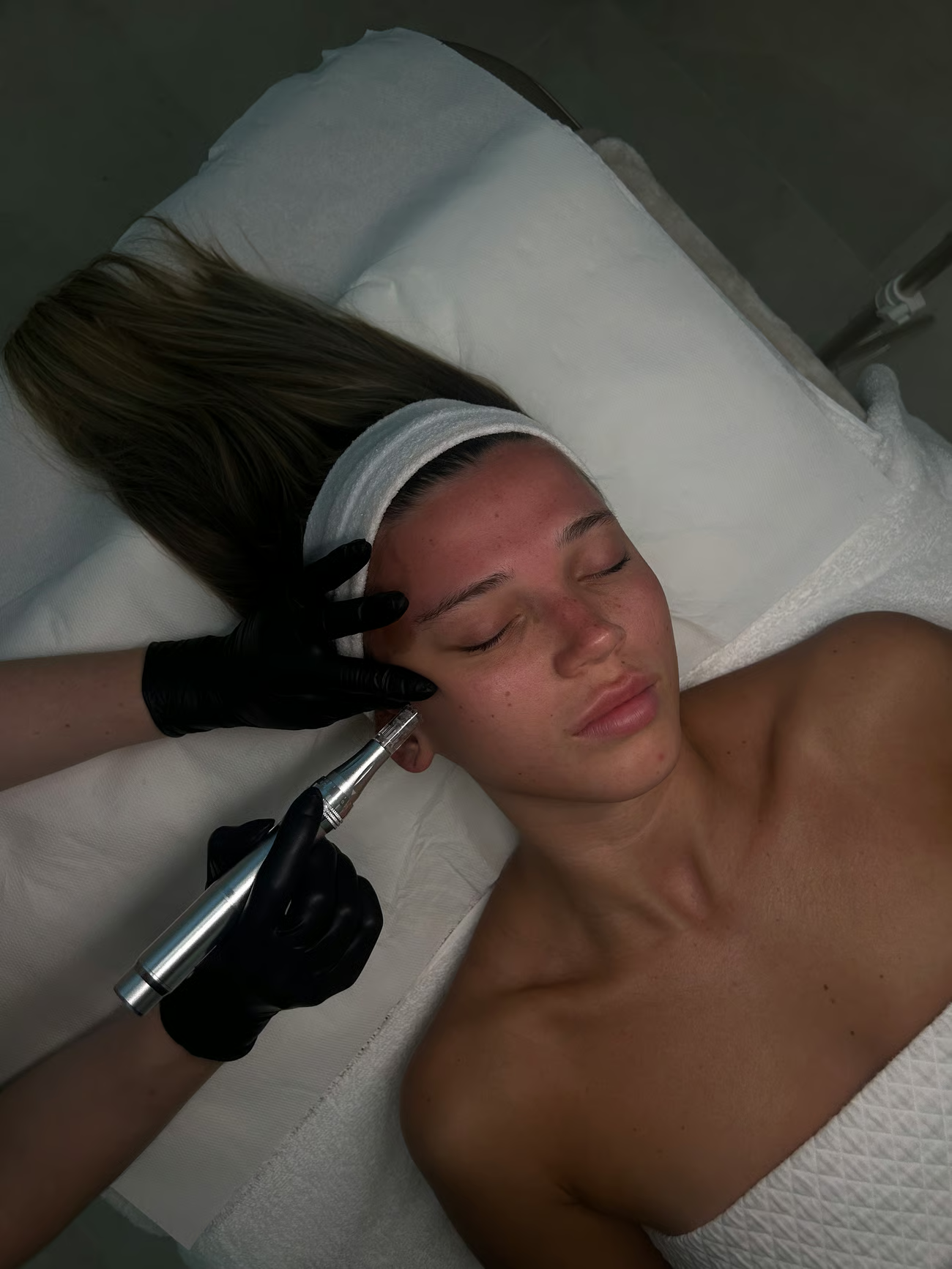
The global skincare market is worth approximately £180 billion right now. By 2030, it’s projected to exceed £230 billion, according to Statista and Grand View Research. That’s not incremental growth. That’s significant expansion.
But here’s the bit that matters if you’re thinking about starting your career right now: the UK skin industry has grown 40% in the last four years. Forty percent. That’s not across a decade. That’s four years. The British Beauty Council and BABTAC industry reports back this up. And the UK aesthetics market alone is valued at £3.6 billion and climbing, according to Hamilton Fraser and Save Face data.
That’s not just an abstract number. Here in the UK alone, that represents hundreds of clinics, thousands of practitioner jobs, and millions of clients wanting to invest in their skin. And that pie is expanding.
And if the big market numbers feel too far away, here’s one from our own inbox. In May 2026, one month, we had 3,150 enquiries and brochure downloads from complete beginners. Not professionals looking to upskill. Beginners. Women at the exact starting point you’re at now, all reaching the same conclusion at the same time. I’ll be honest: even we were surprised by that one.
“Better outcomes mean you can charge what you’re actually worth. And clients will pay it.”
The treatment tech has evolved dramatically
When I started in this industry, it was nothing like it is today. There was no Korean skincare. There were no fancy training academies. There were no Instagram or TikTok accounts to learn from and be inspired by. I learned my first skincare treatment, chemical peels, from Dermaceutic themselves, who sent a trainer out to the salon I was freelancing in at the time. It was a totally off-the-cuff training day and I didn’t expect much from it. But I fell in love. That one unplanned afternoon became the start of my own skincare love story.
And back then, the treatments a skincare professional could offer were limited. Chemical peels, basic microdermabrasion, facials. That was mostly it. And they were okay treatments. They worked. But they were limited in what they could achieve.
Now? The technology landscape has completely transformed. Advanced microneedling with radiofrequency. Chemical peels at depths that actually shift pigmentation and collagen. LED therapies backed by genuine clinical research. Polynucleotides: biostimulators that trigger the skin’s own regeneration. Skin health diagnostics that let you assess and track improvements with precision.
What this means, practically, is that qualified skincare professionals can solve bigger problems. They can offer real transformations. And when you’re solving bigger problems and delivering visible results, you can charge premium prices for it. Better outcomes equal more value. More value equals premium positioning. That’s not hypothetical. That’s how pricing works.
Social media has completely changed how you build a client base
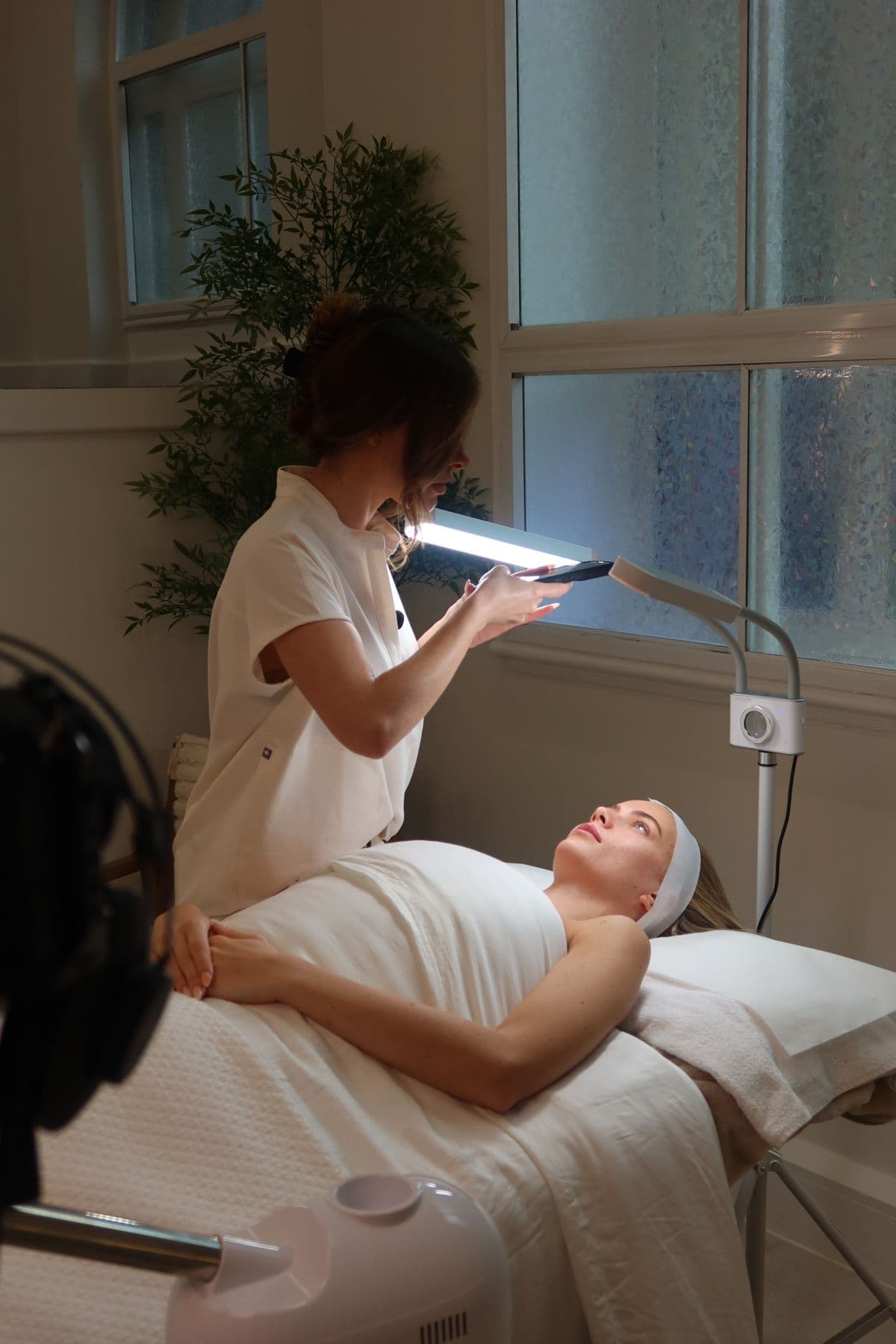
There’s a thing that wasn’t possible ten years ago. A newly qualified skincare professional in a small town (let’s say Carlisle, or Cheshire, or anywhere) can now build a completely full diary from Instagram and TikTok. They can showcase their work, build authority, and attract clients who specifically want what they do. The algorithm lets them be found. The internet lets them be everywhere.
That’s genuinely transformative for someone starting out. You’re not dependent on a clinic’s existing client base. You’re not limited by geography. You have tools (free tools, mostly) to build your own practice and your own audience.
You don’t need to be obsessed with skincare (most of our students aren’t)
Here’s something people get wrong constantly. Most people think you need a huge passion for skincare, or a background in healthcare, to start this career. Honestly? You don’t. It helps, of course. But I’d estimate 85% of our students at MSTA are total beginners.
Maybe they’re completely new to skincare but they’ve been getting treatments themselves in the run-up to their wedding, and somewhere between the facials they’ve thought: wow, this looks like a fun job. I think I could really be passionate about this. Or maybe they’re a soon-to-be mum, looking at the calendar every single day thinking, how on earth am I going to go back to work after I’ve had this baby? I need to do something new. And while their mind is open to new ideas, they bump into skincare.
And then yes, there are the people who are totally, utterly obsessed. Internally at MSTA we call them the passionistas. I don’t even know if that’s a real word. But it describes the women who, even if they never worked in the industry, would still be doing skincare every day, every week, every month. They know all the treatments. They know the brands. They’re already giving advice to their friends and family for free. And they’re just 15% of the people who start careers through MSTA. The other 85% simply started.
And our students are seeing it first-hand
Kirby Timmins spent more than a decade as a primary school teacher. She first looked at training with us back in 2024, and then she did what so many women do: she sat on it. For two years this stayed on her “one day” list while the day job carried on. Then this spring she finally booked her place, trained with Keji and Caitlin at the academy in March, and qualified at the start of April.
Barely two months later, she’s a working skin practitioner covering Leeds and Wakefield, specialising in anti-ageing, with real, paying clients in her diary (she’s @medskinnco if you want to watch it happen). And the bit I love most? When she qualified, she told our community she was nervous. Nervous, and doing it anyway. That’s not an anomaly. That’s what the market looks like right now.
When we talk to women who are considering training, a lot of them say: “But what if I can’t find enough clients?” And my answer now is simple: the clients are there. The demand is real. The question is whether you’re trained well enough to actually serve them properly.
The earning potential is genuinely sustainable
Let me be clear: I’m not going to sit here and tell you that you’ll be a millionaire. That’s not what I’m saying, and it wouldn’t be honest. What I am saying is that a well-trained, well-positioned skincare professional can build a really solid living from this work.
UK skincare professionals who specialise in advanced treatments (chemical peels, microneedling, professional protocols) charge between £75 and £250 per treatment. That’s the market rate right now. A full diary (let’s say four clients a day, five days a week) at an average of £150 per treatment means £120,000 a year in gross revenue before costs. And for many practitioners, particularly those working part-time or specialised, the math is stronger than that.
It’s realistic to see £60,000 to £100,000+ in annual revenue as a well-positioned practitioner. Not overnight. But within your first two years. And that’s before you add the extras: product sales, retinol protocols, advanced treatments, team building. It grows from there.
So what’s the actual ask?
If you’re reading this and thinking “okay, but I’m still nervous,” I get it. Career changes feel big. And they are. But the thing I’d say is this: you don’t have to commit to the full journey right now. You don’t have to bet your entire life on it immediately.
What you can do is have a conversation. A real one. Thirty minutes with someone who’s trained hundreds of women to do this work. Someone who knows your exact situation because we talk to women in exactly your position every week. Someone who’ll tell you straight whether this is the right fit for you or not.
That conversation is free. It’s confidential. And it’s genuinely just a conversation. If ASFB isn’t right for you, we’ll tell you. If it is, we’ll map out what it could look like for your life, your timeline, your goals. No pressure. No hard sell. Just honesty.
2026 is genuinely the year to do this. The market is ready. The technology is here. The demand is real. And the pathway to get qualified is clearer than it’s ever been.
Lots of love,
Kirsty x