
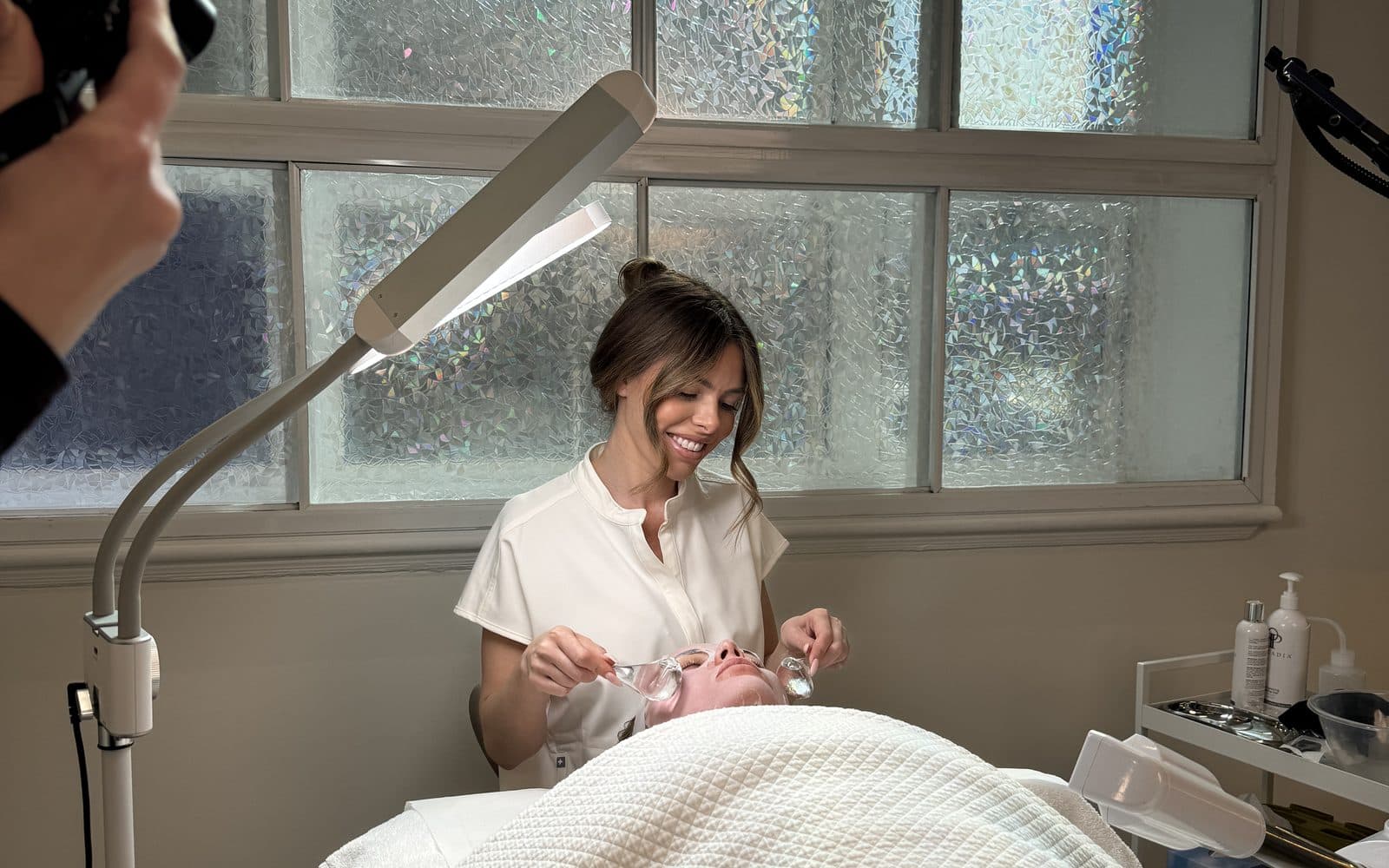
When someone tells me they want to open their own skin clinic, they usually want to talk about the fun bits first: the premises, the branding, the treatment couch, the paint colour. I understand completely, because I did exactly the same. But I opened my own clinic before I ever taught a single student. Model Standards, my Liverpool clinic, opened in 2014, and the academy didn’t begin training until 2018. Everything I teach about running a clinic comes from years of actually running one, and I can tell you the fit-out was never the thing that made it work.
So this is not theory. It’s my honest answer to a question I get asked most weeks: what training do you actually need before you open your own skin clinic in the UK? The answer has two halves, and almost everyone only prepares for one of them.
Half one is the clinical foundation: the recognised qualifications that let you treat skin safely and get insured. Half two is the business craft: pricing, consultation, rebooking, and a treatment menu that actually makes money. Courses are generally good at the first half. Almost nobody teaches the second. Let’s do both properly.
The short answer
What you need to open a skin clinic in the UK
Build the same qualification foundation as any skin professional: recognised, Ofqual-regulated Level 2 and Level 3 facial courses covering treatments, skin analysis and consultation, because insurers want to see recognised qualifications behind every treatment you offer. As an owner, going deeper into Level 4 and beyond pays off, since you are the most senior person in your own clinic. Then add the part courses rarely teach: pricing, rebooking and menu design. Premises and treatment requirements are questions for your insurer and your local council, and asking them early is part of doing this properly.
| Stage | What it covers | Why it matters to an owner |
|---|---|---|
| Foundation | Regulated Level 2 and 3: skin science, consultation, facials | Gets you qualified and insurable |
| Specialist depth | Level 4 and beyond: advanced treatments, complex skin | You are the senior person in the room |
| Business craft | Pricing, consultation-to-rebooking, menu design | Keeps the doors open |
| Setup | Insurance, premises, practical basics | Answered by your insurer and council, not by blogs |
First, the truth about what a clinic actually is
A skin clinic is two things stacked on top of each other. Underneath is the craft: your ability to read skin, plan treatment and deliver results, safely and consistently. On top is the business: the pricing, the diary, the returning clients, the numbers. The craft earns you the right to open the doors. The business keeps them open. I have watched genuinely talented practitioners struggle because they ignored the second part, and I have watched confident marketers come unstuck even faster because they skipped the first. You need both, and the good news is that both can be learned.
The qualification foundation: it’s the same ladder
Here’s something that surprises people: there is no separate “clinic owner” qualification. You climb the same ladder as any skin professional. That means recognised, Ofqual-regulated Level 2 and Level 3 training covering facial treatments, skin analysis and consultation, then specialist training for each treatment you want on your menu. The reason recognised qualifications matter so much is simple and practical: insurers want to see them before they will cover you for a treatment, and without insurance there is no clinic.
At MSTA we deliver Ofqual-regulated VTCT qualifications from Levels 2 to 6 in Liverpool, and I’ll happily say that other good providers exist across the UK. What matters is not whose logo sits on your certificate; it’s that the qualification is recognised and regulated, and that the training behind it was genuinely thorough. If you’re right at the beginning of this journey, before the clinic dream even, start with my complete guide on how to become a skincare specialist in the UK, then come back to this one.
Why owners specifically benefit from Level 4 and beyond
An employed therapist with a tricky case can knock on a senior colleague’s door. When you own the clinic, you are the door. The client with reactive, complicated, been-everywhere-else skin will find their way to you, and there is nobody to pass them to. That is the single biggest reason I push clinic owners towards deeper training in advanced aesthetic skincare at Level 4 and beyond: not for the certificate on the wall, but because depth is what lets you say yes, safely, to the clients who build a clinic’s reputation.
Depth pays twice more. First, in the consultation room: an owner who can explain exactly what is happening in a client’s skin, and why this plan and not that one, converts consultations without ever feeling salesy, because it isn’t sales, it’s expertise. That habit of understanding skin properly is the whole reason we publish Skinipedia. Second, later on, when you hire: the owner sets the clinical standard for everyone in the building, and you cannot check work you don’t deeply understand. For qualified professionals heading in this direction, our advanced route is The Ultimate Skincare Professional.
The skills nobody trains, and a clinic lives on
Pricing. Most new owners price by copying the salon down the road, which means inheriting someone else’s costs, someone else’s positioning and someone else’s mistakes. Price from your own numbers instead: what the treatment costs you to deliver in products, room and time, what your level of training is genuinely worth, and who you want to attract. Underpricing is the most common way I see new clinics quietly exhaust their owners.
Consultation to rebooking. A clinic does not live on new clients; it lives on returning ones. The skill is building treatment plans, not selling one-off appointments: a proper consultation, a clear plan across a course of treatments, and a rebooking conversation that happens naturally at the end of every visit because the plan makes the next step obvious. Get this right and your diary compounds. Skip it and you are on the new-client treadmill forever, which is expensive and exhausting.
The menu. New owners almost always build menus that are too long. A menu of five treatments you are genuinely brilliant at will outperform a menu of twenty you are average at, every time. Fewer treatments means deeper skill, simpler stock, clearer marketing and results that speak for themselves. Master a small number of treatments, build your reputation on them, and add to the menu only when demand pulls you there.
Starting from scratch with a clinic as the long-term goal? Our beginners hub walks you through the whole journey in order, and the brochure sets out every pathway in detail.
Insurance and premises: the questions to ask before you spend a penny
I am deliberately not going to tell you what the answers will be here, because they depend on your treatments, your premises and where you are in the UK, and they change over time. What I can give you is the two conversations to have early, before you commit money to anything.
Ask your insurer:
- Which qualifications do you accept for each treatment on my planned menu?
- What does my cover include and exclude, treatment by treatment?
- What changes if I work from home, rent a room, or take my own premises?
- Is there anything on my menu you will only cover with additional training or supervision?
Ask your local council:
- Is there anything I need to register or apply for, for my premises or for the specific treatments I plan to offer?
- Does the property I have in mind need permission for the way I want to use it?
- How should clinical waste be handled for the treatments on my menu?
Those two conversations give you answers you can actually rely on. A blog post, including this one, should only ever give you the questions.
The honest economics of year one
I will not promise you numbers, and I would be careful with anyone who does. But I can show you the shape of it. As an illustration only: imagine a clinic room charging 70 pounds per treatment, seeing three clients a day, three days a week. That is around 630 pounds a week coming in, before room rent, products, insurance, marketing, ongoing training and tax come out, and before the quiet weeks that every new clinic has. Change any input, your prices, your treatment mix, how many days your diary genuinely fills, and the whole picture changes. Which is exactly why the pricing and rebooking skills above matter more than the fit-out ever will.
The realistic shape of year one is building the base: months where the diary is part-full while your returning-client list grows. That is normal, not failure. The owners who come through it comfortably are the ones who kept fixed costs low, started from a home room or a rented room rather than a long lease, and let the diary justify each upgrade rather than the other way round. Open lean, prove the demand, then grow.
Stay solo or hire?
Stay solo longer than your excitement wants you to. The time to think about hiring is when your own diary has been consistently full for months, your rebooking is strong and you are genuinely turning people away, not when a quiet Tuesday makes you feel like a bigger team would fix things. And know what hiring really means: your job changes. You become the person who trains, checks and leads, the keeper of the clinic’s standard. That is where your own depth of qualification quietly pays off a second time, because you cannot uphold a standard you have never been trained to.
Where MSTA fits, and where it doesn’t
We are one provider among several good ones in the UK, so choose whoever trains you most thoroughly. What I will say is that MSTA was shaped by being a clinic first: Model Standards opened in 2014, the academy followed in 2018, and both live in Liverpool at our Rodney Street and Chapel Street academies. We have trained over 1,000 students and helped launch more than 500 careers, and many of our students have gone on to open their own studios and clinic rooms. If you are starting from zero, Aesthetic Skincare For Beginners is our flagship route in; if you are already qualified and want owner-level depth, look at The Ultimate Skincare Professional. You can browse everything on our courses page, and payment plans are there if you need to spread the cost.
One more thing, because honest data on this industry is rare: our 2026 State of the UK Skincare Industry survey is live right now, and the report publishes this autumn with real UK earnings and career data. If you want the truthful picture of what this career and this business look like, that is where it will be.
The questions owners ask me
If yours isn’t here, ask. You’ll get a real answer from a real person, not a pitch.
What qualifications do you need to open a skin clinic in the UK?
Start with the same foundation as any skin professional: recognised, Ofqual-regulated Level 2 and Level 3 training covering skin analysis, consultation and facial treatments, then add specialist training for each treatment on your menu. As an owner you will get real value from going deeper, into Level 4 and beyond, because clients with complex skin will come to you and there is no senior colleague to pass them to. Whatever you choose, check with your insurer that they recognise the qualification behind every treatment you plan to offer.
Do you need a licence to open a skin clinic in the UK?
I am not going to give you a blanket answer here, because what applies depends on your premises, your treatment list and where you are in the UK, and it can change. The reliable move is to ask your local council what applies to the premises and treatments you have in mind, and to ask your insurer exactly what they need to see before they will cover you. The one constant is that insurers want recognised, regulated qualifications behind every treatment on your menu.
How much does it cost to open a skin clinic?
There is no single figure, because the biggest costs depend on choices you control: whether you start from a home treatment room, rent a room inside an existing salon or clinic, or take on your own premises. Equipment, stock, insurance and training vary too. My honest advice is to start leaner than your ambition wants you to, prove the demand, then reinvest. A full clinic fit-out is something you earn your way into, not something you need on day one.
Can a complete beginner work towards opening their own clinic?
Yes, and plenty of our students have done exactly that, but respect the order: qualify properly first, practise until you are genuinely confident, build a base of returning clients, and only then take on premises. Many people start home-based or renting a room while they build. The clinic is the destination, not the starting point.
Do you need a medical background to open a skin clinic?
No. You do not need to be a nurse or a doctor to own and run a skin clinic. A small number of advanced treatments sit in medical hands, and your insurer will tell you exactly where those lines fall for your menu, but the majority of results-led skincare is open to properly trained non-medics. What matters is the depth and quality of your training, not the letters after your name.
When should a clinic owner hire their first team member?
Later than the excitement wants you to, is my honest answer. Wait until your own diary has been consistently full for months, your rebooking is strong and you are genuinely turning people away. Hiring changes your job: you become the person who trains, checks and leads, which is exactly where deeper qualifications pay off a second time. Hire from real overflow, not from optimism.
If you take one thing from this
Build the craft first, deeply enough that complex skin doesn’t scare you. Learn the business half on purpose, because nobody hands it to you. Ask your insurer and your council the awkward questions before you spend a penny. Then open lean and let real demand pull you forwards. I opened my clinic before I ever ran an academy, and that order, craft first, premises last, is still the best advice I have.
Lots of love, Kirsty Xxx