

Your 2026 guide · Starting out
How to start a career in skincare in the UK, in 2026.
Right, before you go looking at courses, let me save you a bit of time. The people who build real careers in skincare almost never start with “which course should I do?” They start somewhere else entirely. This is the honest guide I wish someone had handed me when I began.
Written by Kirsty Stevenson · Founder & Training Director
Last updated: May 2026
In this article
The bit nobody tells you
Most people start with the wrong question.
When someone messages me wanting to get into skincare, the first thing they usually ask is “which course should I do?” It’s completely understandable, but it’s the wrong place to begin, and starting there is how people end up with a drawer full of certificates and no actual career.
The better question is much simpler, and a little scarier: where do you actually want to end up? Get clear on the destination first, and the route almost chooses itself. So that’s where we’re going to start: with you, and the career you’re really trying to build.
The destination comes first
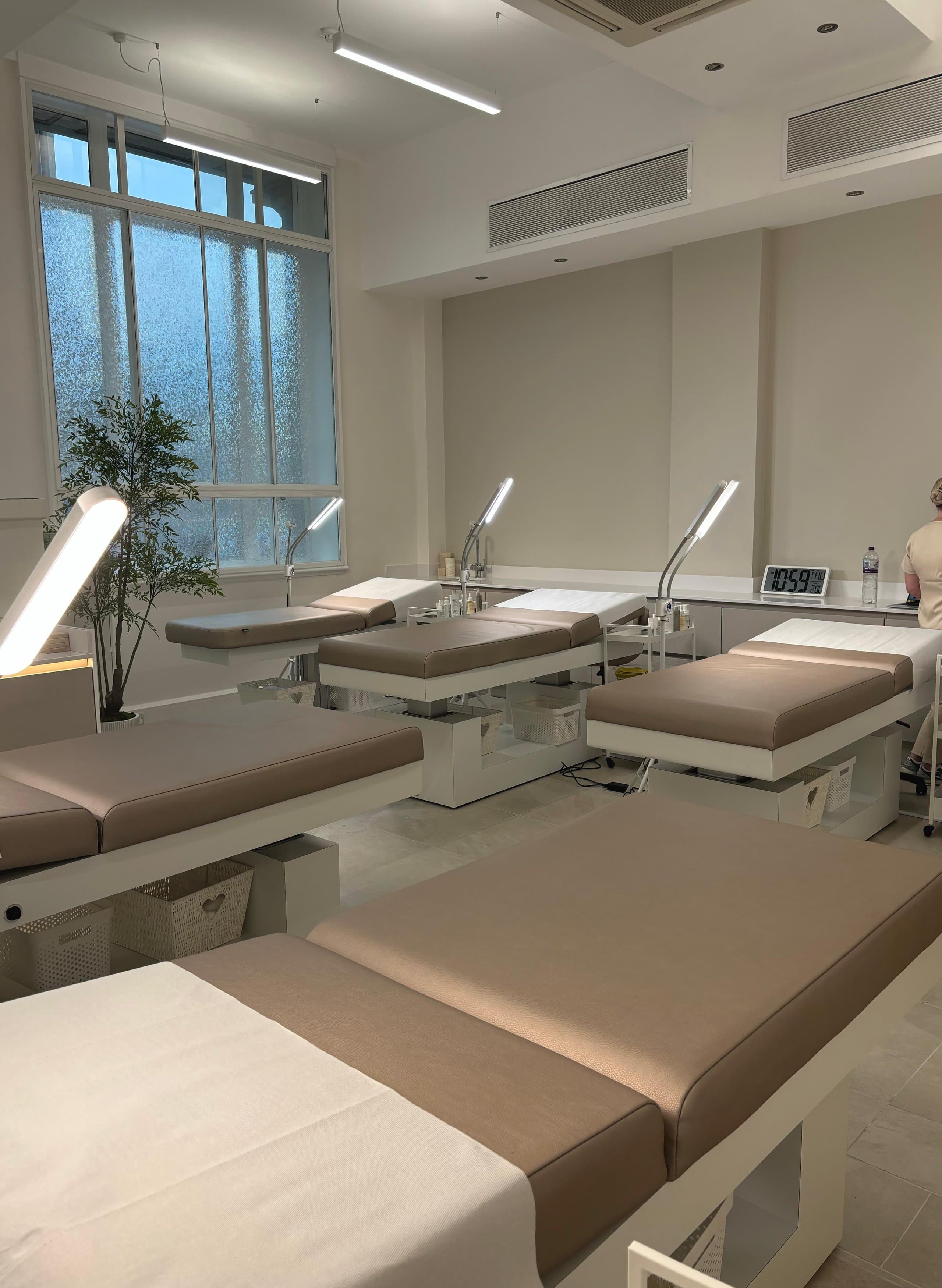
Picture the room you want to work in. Then we’ll find the route that gets you there.
The job itself
So what does a skincare specialist actually do?
Let’s clear this one up first, because it’s where a lot of people get the wrong picture. A skincare specialist isn’t someone who just “does facials”. You’re the person who actually understands skin: what’s going on underneath it, why it’s behaving the way it is, and what will genuinely make a difference for the person in front of you.
In practice the job is part detective, part clinician, part coach. You read the skin, you build a proper plan, you deliver the treatments. Then you guide that client through the months it takes to get real, lasting results. Here’s what that looks like day to day.
Read the skin
Proper consultations and skin analysis: working out what’s really going on, and why, before you treat a single thing.
Build a plan
Not a one-off facial, but a strategy: the right treatments in the right order, paced to the client’s skin and their life.
Deliver the treatments
Facials, chemical peels, microneedling and advanced skin treatments, carried out safely, confidently and to a high standard.
Guide the results
Adjusting as the skin changes and keeping clients on track over time. Being their trusted person is where the real career lives.
The simple way to think about it
Four steps, in the right order.
You don’t need a complicated plan. You need these four things, done in this order. Doing them out of order is what trips most people up.
Picture the destination
Before you pick a course, pick a place to end up. The day you actually want, the clients you want to treat, the room you want to work in. Everything else is just the route there.
Choose your route in
There isn’t one way into skincare in the UK: there are several, and each has its advantages. The right one depends on where you’re starting and where you’re headed.
Qualify & get insured
Get the recognised, regulated training that lets you treat real skin safely, and that insurers and clients actually look for before they’ll trust you with their face.
Specialise, then grow
Once you’re qualified and working, this is where the real career happens: stacking specialist skills, finding your niche, and building something that’s properly yours.

A word from Kirsty
“I’ve trained people who walked in terrified and walked out running their own clinic. Not because they were special, but because they finally saw skincare for the real profession it is.”
Kirsty Stevenson · Founder & Training Director, MSTA
Step one
Picture your destination.
I’m going to ask you to do something that feels a bit indulgent: daydream for a minute. Picture your day, a couple of years from now. Where are you? Who’s in the chair in front of you? What are you treating, and what are you known for?
This isn’t fluffy. The clearer that picture is, the easier every decision after it becomes. Which route, which qualification, which specialisms, even how you price. Here are a few of the destinations our students aim for. None is “better” than another. They’re just different lives.
The acne & problem-skin specialist
You become the person people are sent to when nothing else has worked. Deeply rewarding, fiercely loyal clients, and a niche that’s always in demand.
The anti-ageing & rejuvenation clinic
Results-led skin health (peels, needling, advanced facials) for clients investing in their skin for the long term. Higher treatment values, longer client relationships.
The advanced facialist / med-spa pro
The treatment-room expert in a busy clinic or spa, trusted with the advanced menu. A brilliant route if you love the craft and the day-to-day of treating skin.
The mobile or home-based skin pro
Your own hours, your own clients, low overheads. The freedom route, popular with parents and career-changers who want skincare to fit around a life, not replace it.
The salon or clinic owner
You build the room, the brand and eventually the team. It starts with treating skin yourself and grows into something bigger that runs whether you’re in the chair or not.
The educator or brand-builder
Some people fall in love with the teaching, the content, the community. Skincare becomes a platform, and that’s a real, growing destination in its own right.
Don’t worry about getting it perfect. You’re allowed to change your mind. The point is to aim at something, because a route only makes sense once you know what it’s a route to.
Step two
Choose your route in.
Here’s something that surprises people: there isn’t one official way into skincare in the UK. There are several real routes, and each one has genuine advantages depending on where you’re starting from. Let me walk you through the main ones honestly, including the bits to be careful about.
If you’re looking for structure, our Ultimate Skincare Professional pathway covers the regulated route comprehensively, with both foundation and specialist modules.
The regulated-qualification route
Best if
Most people starting from scratch, especially if you want the widest range of doors open from day one.
The advantage
An Ofqual-regulated qualification (think VTCT Level 3 and beyond) is the broadest, most recognised foundation there is. It’s what insurers, pharmacies and clients understand, and it underpins almost everything you’ll go on to do.
Worth knowing
It’s the most thorough route, so it asks the most of you up front. That depth is the whole point: it’s what makes everything you specialise in later sit on solid ground.
The fast-track + specialist-CPD route
Best if
People who want to be treating skin sooner rather than later, then build outward from there.
The advantage
You get your core qualification efficiently, then stack CPD-certified specialisms on top (chemical peels, microneedling, advanced facials), adding skills (and income streams) as you go, at your own pace.
Worth knowing
“Fast” should never mean thin. The fast-track only works when the foundation underneath it is genuinely solid, so be choosy about who you learn the basics with.
The beauty-therapist conversion
Best if
Anyone already working in beauty or aesthetics who wants to move properly into skin.
The advantage
You’re not starting from zero: you already have client skills and a salon-floor instinct. Adding regulated skin training and specialist CPD lets you raise your prices, your standard and the kind of work you take on.
Worth knowing
Skin is its own discipline. A facial qualification isn’t the same as understanding skin health. Closing that gap is exactly what takes you from “does facials” to “skin specialist”.
The medical-professional route
Best if
Nurses, dentists, prescribers and other healthcare professionals moving into skin and aesthetics.
The advantage
Your clinical background is a genuine head start, particularly for the more advanced, results-led end of skincare. You can move quickly into specialist training and command real authority with clients.
Worth knowing
A medical background doesn’t automatically mean you’ve been taught skin as a specialism. The best clinicians still invest in proper skin education: it’s what separates safe from exceptional.
The honest money talk
How much can a skincare professional earn in the UK?
I’m not going to print a salary figure here, and I’d gently say be wary of anyone who does, because the honest answer is “it depends”, and what it depends on is mostly within your control. So instead of a made-up number, let me show you what actually moves it.
Employed or self-employed
Starting out employed in a clinic gives you steadier income while you find your feet. Going self-employed (mobile, home-based or your own room) means you set your own prices, and what you earn isn’t capped by a wage.
What’s on your menu
A basic one-off facial and an advanced, results-led course of treatment sit at very different price points. The more specialised and in-demand your skills, the more each hour of your time is worth.
The business behind it
Pricing, rebooking, retention and reputation are what turn “busy” into “profitable”. It’s the part most courses skip, and exactly why we teach it.
The pattern I see over and over is simple: the people who earn well are the ones who trained properly, specialised in something, and treated it like the real business it is. There’s no ceiling stamped on this career. There’s no shortcut to it either.
Clearing up the biggest myth
Do you have to be a medic to become a skincare specialist?
Short answer: no. Some of the most talented skin specialists I’ve ever trained walked in with no medical background whatsoever. Just a real commitment to learning skin properly. You don’t need to be a nurse, a doctor or a prescriber to build a thriving career in skincare.
Here’s the nuance worth knowing. A clinical background canbe a genuine head start at the most advanced, results-led end of the industry, and a small number of treatments do sit in medical hands. But for the vast majority of skincare work, what matters isn’t the letters after your name. It’s whether you’ve been taught skin as a proper discipline, and whether you can treat it safely and confidently.
Two real routes, one standard
Kirsty. The beauty-therapy route
Our founder, Kirsty Stevenson, started with a Level 2 & 3 beauty-therapy NVQ back in 2012. No medical background at all. Then never stopped investing in specialist CPD, including her early chemical-peel training delivered by Dermaceutic themselves.
Jemma. The medical route
Jemma Hesketh, one of our skincare clinicians and lead educators, came at it the other way: she began as a registered nurse and progressed in through the medical route.
Two completely different starting points. No right or wrong answer. What mattered for both was the same thing: the quality of the training they invested in.
That’s the real entry ticket: not a medical degree, but proper, recognised training. Which is exactly what we built MSTA to give you.
Where we fit in
However you start, we’ve got a route for it.
This is the part where I’m allowed to mention what we do. But only because it maps so neatly onto everything above. We built MSTA around exactly this idea: pick your destination, then take a route that’s been thought through properly.
Our Learning Pathways are the regulated-qualification route, done the way it should be. Ofqual-regulated VTCT qualifications, hands-on training and real coaching afterwards. Our Executive Skincare Courses are the specialisms you stack on top once you’re qualified.
Honest answers
The questions everyone asks me.
If yours isn’t here, just ask. You’ll get a real answer from a real person, not a sales pitch.
Do I need a qualification to work in skincare in the UK?
Here’s the honest version: UK skincare isn’t governed by one single licence the way a lot of people assume, which is exactly why what you train in matters so much. Insurers, clinics, pharmacies and increasingly clients themselves look for recognised, regulated training before they’ll trust you. So while there isn’t one legal box to tick, a proper qualification is what actually opens doors and keeps you (and your clients) safe.
How long does it take to get started?
It depends entirely on your route. Some people are qualified and treating clients within weeks through an intensive, hands-on course; others build more gradually around a job or family. There’s no single right speed: the right pace is the one that still leaves you genuinely confident on real skin at the end of it.
Do I need to be a nurse or have a medical background?
Not at all. Plenty of brilliant skin professionals come in with no medical background whatsoever. They just commit to learning skin properly. A clinical background can be a head start for the most advanced treatments, but it’s absolutely not a requirement to build a thriving skincare career.
Can I train around a full-time job?
Yes, lots of our students do exactly that. Many routes are built to fit around work and family, combining online theory you do in your own time with hands-on training days. If you’re career-changing, you usually don’t have to jump before you’re ready.
Will I be able to get insurance?
Insurers want to see recognised, regulated training before they’ll cover you for a treatment. That’s the whole reason it matters which course you choose. Once you’re properly qualified, arranging cover is straightforward, and we’ll happily point you in the right direction.
How much can I earn?
I’ll never put a number on this for you, because it wouldn’t be honest: earnings depend on your route, your location, your treatments and how you build your business. What I can tell you is that the people who do well are the ones who train properly, specialise, and treat it like the real career it is. We teach the business side precisely because the skill alone isn’t the whole picture.
Written by
Kirsty Stevenson
Founder & Training Director, MSTA
Kirsty has trained hundreds of skincare professionals across the UK and over 1,000 from around the world. Over the past few years, she has built MSTA into one of the country’s most respected skincare training academies. She is also the owner and managing director of Model Standards Skincare Clinic. She writes honestly about careers in skincare, the real routes in, what the industry actually looks like for professionals, and what it takes to build something you’re proud of.
Last updated: May 2026
Watch
How to start a career in skincare in the UK
Video coming soon. Check back shortly.
One last thing
If you take one thing from this, let it be this.
Don’t start with the course. Start with the life you want, pick a route that’s built properly, and commit to learning skin like the real profession it is. Do that, and you won’t just collect a qualification. You’ll build a career. That’s the whole game.
Lots of love, Kirsty Xxx